

Jump into the current
My Cantopop Nights by Emma-Lee Moss x Solara Natural Orange Wine, Romania

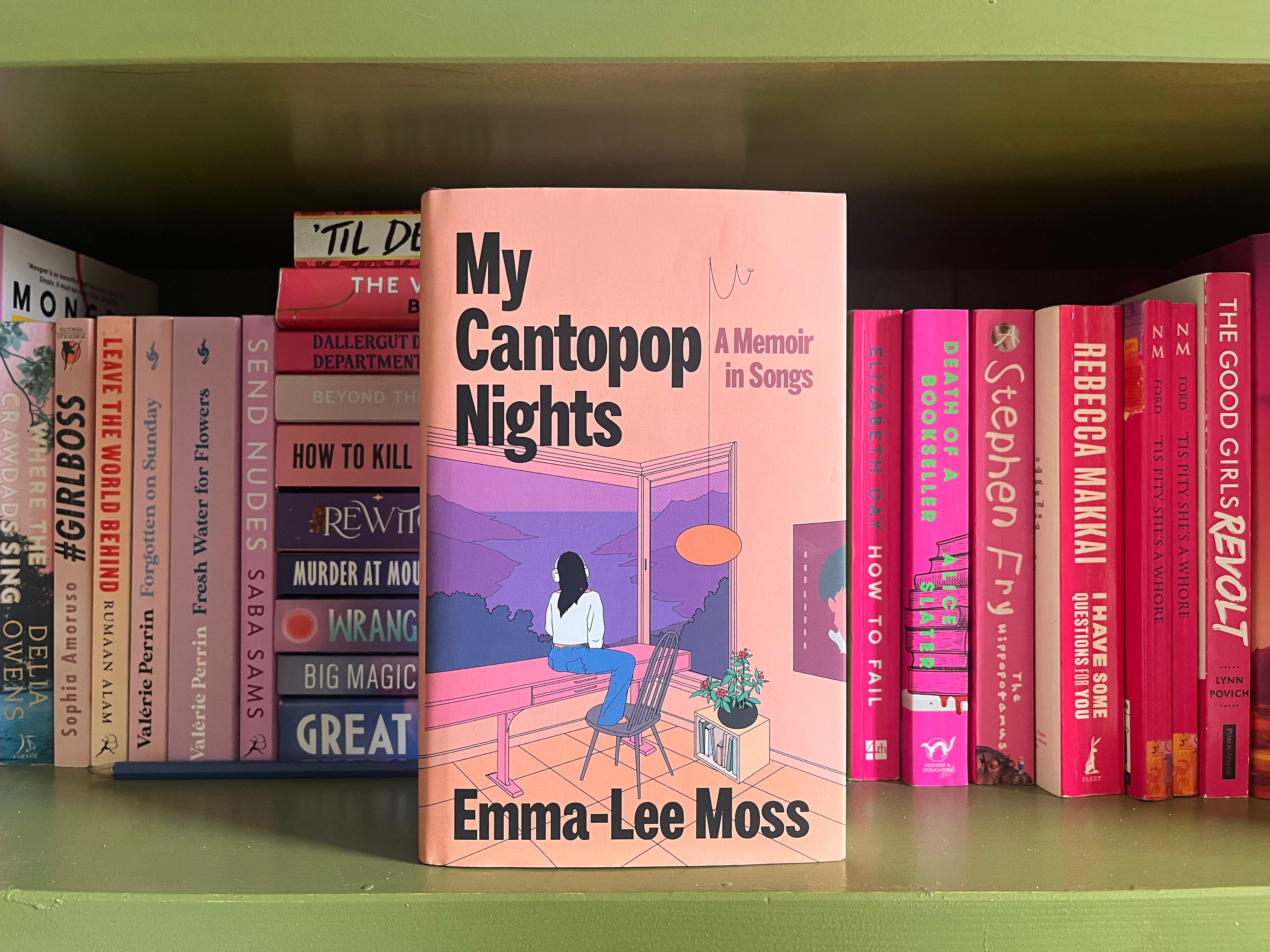
‘All relationships, all meetings are predestined. Every person you have ever met, walked past, fallen in love with. […] This is the story of karma… it takes thousands of years for two people to come together in one room.’
One of my long-term fascinations is with so-called untranslatable words.
Welsh words like ‘hiraeth’, which refers to the melancholic homesickness for a place you’ve never been or a person you’ve never met. Or the German ‘fernweh’, which literally translates into ‘farsickness’ and captures the intense longing to travel and experience faraway places. They’re small words that capture more than themselves.
In her talk at Hay, ahead of the launch of My Cantopop Nights, Emma-Lee Moss discussed a Cantonese word: yuanfen (缘分). Like fernweh or hiraeth, it’s not directly translatable. No single English word neatly expresses the Chinese concept of ‘fateful coincidence’ - the belief in how past lives circle us, guide us, bring people together or apart.
Scribbling in the audience, I wrote ‘anam cara’ next to ‘yuanfen’, making a comparison to the ancient Irish Gaelic term that translates to ‘soul friend’. There are similarities. Both encompass a world of folkloric and philosophical concepts from reincarnation to soul circles; both contain the idea of souls travelling together through history, leaving marks on each other.
Still, neither is quite the other.
And I think what I love about this - and the thing that sent me sprinting down the Hay Festival to grab my copy of Cantopop Nights before my next event - is that even when a word doesn’t directly translate, it’s not always because we are worlds apart. It’s because our cultural stories fold our human experiences into different shapes, quilt them into expressions. Unpack them, shake them out like fresh linens, and inside you’ll find the same yearning for connection, the same sneaking suspicion that we are not here by accident, that the people we love have always been finding us.
These untranslateable words are the purest expression of our magical thinking.
But enough, dear scribblers, let’s talk about this memoir and its pairing.
(Perhaps in the past weeks since publication, you’ve been lucky enough to lose yourself in its pages. If not, don’t worry. No spoilers here.)
The Book: “A story of music, fandom and identity, from the acclaimed singer-songwriter Emma-Lee Moss (a.k.a. Emmy the Great)”.
We start with eleven-year-old Emma-Lee listening to the sound of Hong Kong in the summer of 1995. It is Cantopop: it is everywhere and it is inescapable and it is hers. When her family moves to England, that love goes underground: the sound and symbol of a secret childhood self. Twenty years later, she finds herself in a Hong Kong bar, listening to a familiar song, and realising that this music was her inheritance. My Cantopop Nights is the story of that reckoning - with identity, with belonging, with art-making, and a city mid-protest - and the uncanny, magical thread that connects who we were to who we’re still becoming.
Tasting notes: There’s a quote on the back of the book from Becky Barnicoat that describes how Emma-Lee ‘brilliantly captures the sweet sorrow of lost places and lost time’. This is a very apt description - from the beautiful pinky-purple cover to the curated glossary of referenced musicians. There is a nostalgia to the tone, a yearning to the early chapters that is so very familiar to those of us who remember making mix tapes with our friends and cousins, who listened to secret tracks on our bedroom floors, who stuck songs on repeat because we wanted to capture the echo behind our ribs (and perhaps still do). It is not a cloying nostalgia - it’s lightly done, sweet and evocative, and given depth by the clear self-awareness with which it is written.
It’s a memoir that takes you on journey through youth and teenhood and those twenty-something years where the question of who we are and what we’ll become is so raw (and so important). It has the textures of family, of evolving relationships as we age, and the tender histories that make us into who we are. It’s made fresh and surprising through its framing around music and its making. And it’s a book that isn’t heavy, but it will sit with you. It lingers.
Where can I buy it? You can get your own gorgeous copy of Cantopop Nights from Waterstones (currently £18.99) or buy direct from your favourite bookshop!
‘One Person Playing Two Roles’, then, was also an invitation - to be a contradiction and OK with that. To be difficult, dreamy, restless and unsure. To crave your own company, to argue with yourself in your own head. […] Faye Wong was not pretty cool, she was an enigma, a goddess, a rebel unicorn I searched for in my own soul. It was Nat who had gone to Tower Records. But I didn’t realise I had made up my own life story. When a journalist ask how I took the train on my own, if I was younger than eleven, I was confused and upset. It felt true to me. I’d been hiding for so long, it was the only position that I was comfortable in.’
The Pairing: Solara Natural Orange Wine, Romania
The theme of this wine is discovery. During Emma-Lee’s talk, I discovered a new artist, a new genre, a new memoir, and new words. I wanted to find a wine that captures that spirit as well.
So let’s welcome our (sometimes divisive) friend: a natural orange wine from Viile Timisului, Romania.
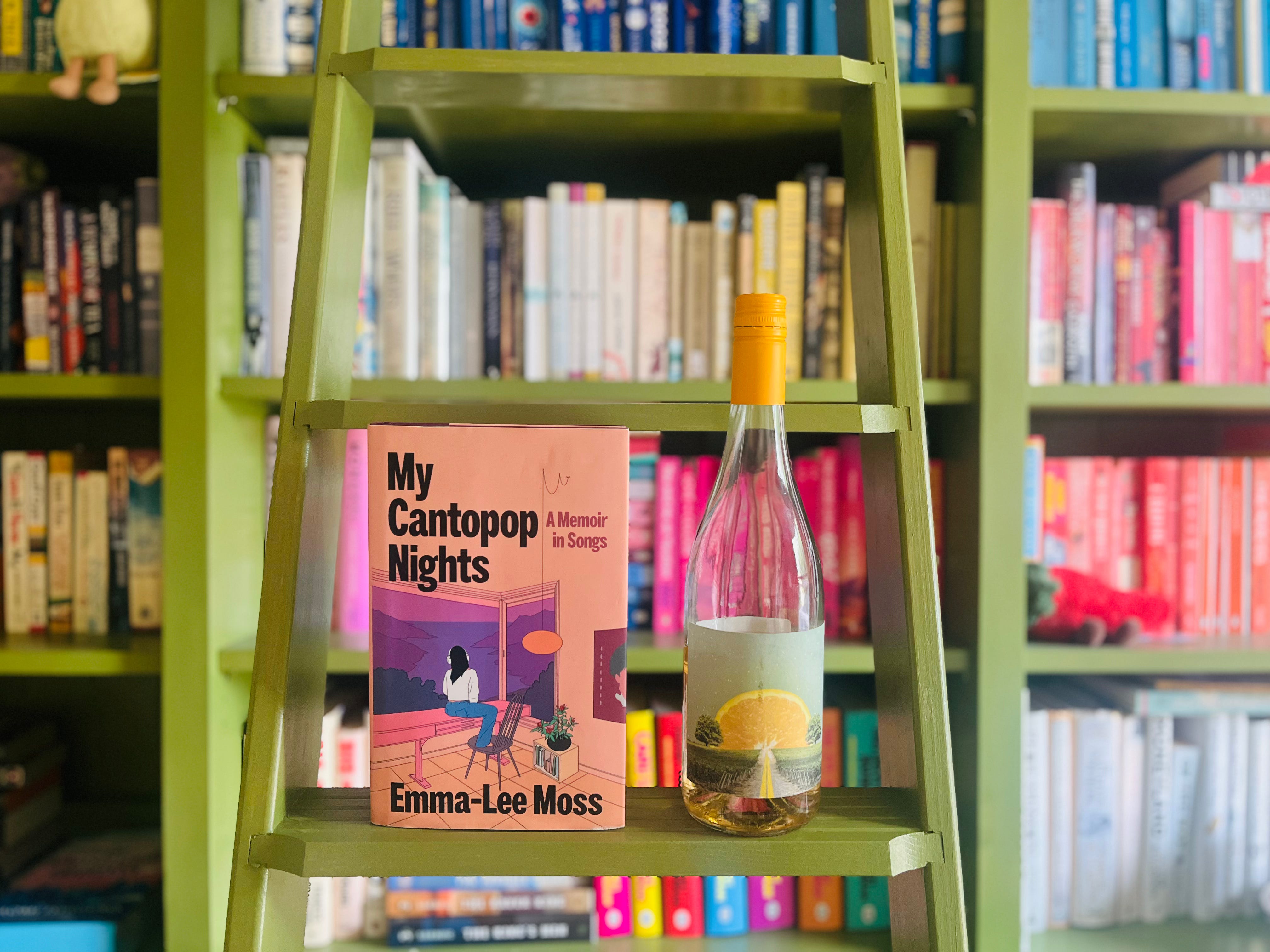
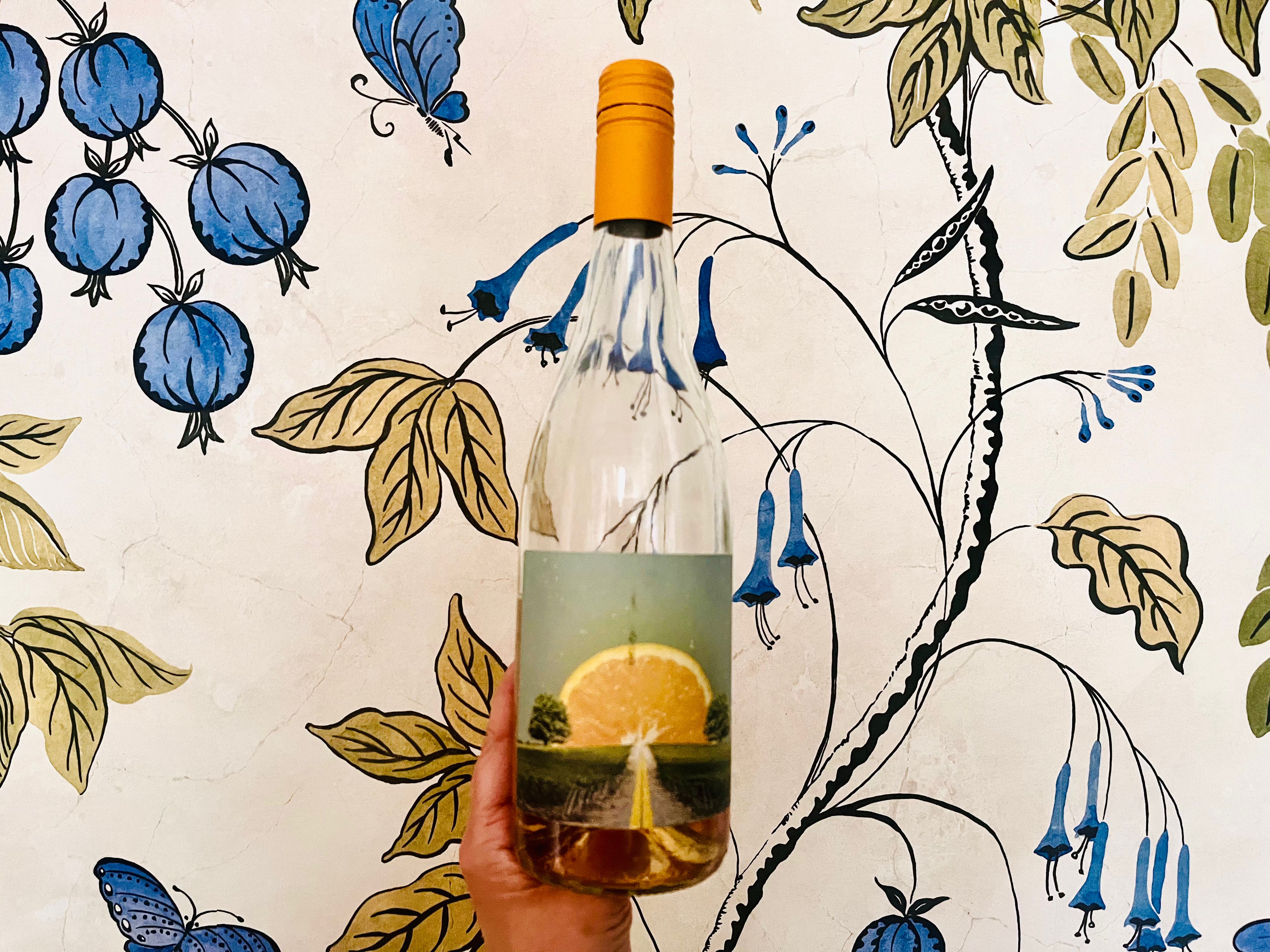
The Wine: Why is orange wine just a little surprising? It’s because of its texture. The skin contact gives it more body, more funk, more tannin. My favourites of these wines are savoury, a little earthy. They’re expressive about where they come from - and that’s certainly the case with Solara. Solara Orange is a blend of well-known grapes like Sauvignon Blanc, with lesser known ones like Feteasca Alba and Tamioasa Romanesca. In other words, the clever vintners at Cramele Recas (one of the most successful Romanian vineyards), take the familiar and blend it with the new and the local. If you’ve not tried an orange before, this is a fantastic wine to use as an introduction.
Tasting Notes: Solara is a gorgeous honey-coloured orange that reminds me of sunshine. Refreshing and crunchy like a white wine, complex like a good red - it has that lovely aroma of apricot and quince, which you really find on the palate too. I would say there’s something like bright apple in there too, a mountainous minerality that expresses where it’s from. For me, this is a wine that tastes like the discovery of the new, yet is delightfully familiar at the same time. Also, where I enjoyed this without food, I can imagine it pairing well with nibbly bits or some tasty manchego with honey.
Where can I buy it? My bottle was picked up, like Cantopop Nights, at Hay. But you can buy yours from online sellers including Noble Green Wines (£13.90 for a bottle, £12.90 in a mixed 6), Flagship Wines (£13.69), or Vivino (£13.99)
Fun facts: I adored this article from Skin & Pulp on Cramele Recas and why we should all be drinking more Romanian wine. As they conclude: “If you haven’t tried Cramele Recas wines yet, they are well worth a go. Offering a level of quality and finesse that is, frankly, a very welcome surprise and value for money that you can’t argue with - you’ve got nothing to lose and everything to gain.”
‘Now I finally understood. ‘Diaspora’ was the only word wide enough for me to live in. It offered permission to be confused, to cry at old movies and fantasise about my grandmother’s youth. It meant that, in leaving Hong Kong, I hadn’t severed my only chance at belonging. In fact, I had entered a new arena, freed from the constraints of geography. No matter where I went, I remained in diaspora.’
What to read next:
Sour Heart by Jenny Zhang - referenced in ‘The Moon Represents My Heart’, this 2017 short story collection feels like a natural place to pick up if you’re interested in a journey into the places and artists mentioned in Cantopop Nights.
Crying in H Mart by Michelle Zauner - a memoir about grief and food and music and identity that was so compelling, I actually forgot it was a memoir at times.
Many a Splendoured Thing by Han Suyin - written in 1952, this novel offers a glimpse back at a post-war Hong Kong, ‘where people come and go and know themselves more impermanent than anywhere else on earth’.
Ghost Forest by Pik-Shuen Fung - An “astronaut family” is a term invented by the Hong Kong mass media to describe a family with an astronaut father flying here, flying there. This funny, poetic little novella explores this concept in fragments, vignettes of a family life.
So many beautiful words out there, gesturing to us, bringing things closer, without ever quite touching. My most recent novel opens with an elderly man in a ‘care’ facility, considering words related to ‘home,’ and having your home stolen from you, and how some languages reduce a word’s scope, and some expand it. The word ‘heimilislegt,’ for example, in his parents’ native Icelandic, simply means ‘homely,’ whereas in the German in a novel he’s reading, there is the word ‘heimisch,’ which means ‘homely,’ but expands to ‘familiar, native, at home.’ Icelandic has the word ‘heimfuss,’ meaning longing for home.’ German has ‘heimweh’ - home pain - to set against your tugging ‘fernweh.’ Surely every language has a word for homesick, but how many, I wonder, have a word for wanderlust.